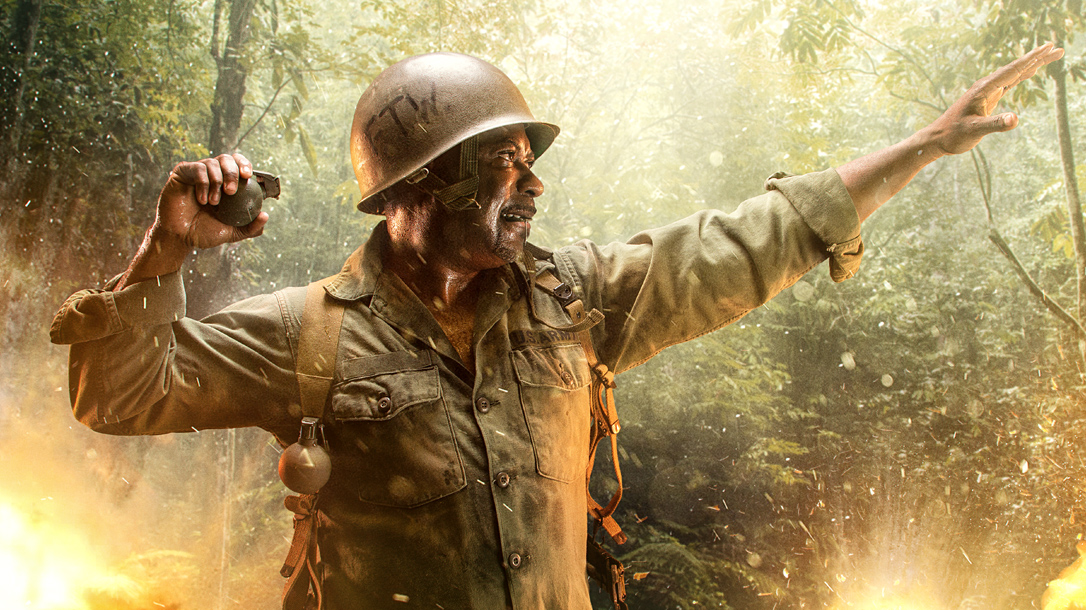
“Close” only counts in horseshoes, women, and hand grenades. Gather round and take a knee. It’s time to get schooled on five grenade types. FRAG OUT!
Frag Out! A Beginner’s Guide to Grenades
Any soldier worth his salt knows that when he hears the phrase “Frag Out!” things are about to get very interesting. It’s one of the most recognizable warnings on the battlefield, usually followed by chaos, dirt flying through the air, and everyone nearby suddenly developing a deep appreciation for cover.
“Frag” is short for fragmentation grenade, a compact but devastating weapon designed to eliminate enemy personnel through blast pressure and high-velocity steel fragments. In simple terms, it’s a hand-held, hand-armed, hand-thrown instrument of destruction that gives the average warfighter serious stopping power in a very small package.
Advertisement — Continue Reading Below
Grenades have been part of warfare for centuries, evolving from crude black-powder bombs tossed by specialized “grenadiers” into the highly engineered explosives carried by modern soldiers today. Despite all the advances in military technology, the grenade remains one of the most effective close-quarters weapons ever created. It’s simple, reliable, terrifyingly effective, and requires no batteries, optics, or Wi-Fi signal to ruin someone’s day.
The standard U.S. military fragmentation grenade, the M67, is roughly the size of a baseball and weighs about 14 ounces. An average soldier can throw one approximately 35 meters, though some hard chargers can launch them even farther. That distance matters because the grenade’s kill radius is about five meters, while the casualty radius stretches out to roughly 15 meters. Translation: if you throw one poorly, congratulations—you’ve just created a very personal problem.
How a Fragmentation Grenade Works
Modern fragmentation grenades are deceptively simple. Inside the steel shell sits a high explosive compound commonly known as Composition B, a mixture designed to detonate with tremendous force. Once the safety pin is removed and the safety lever—or “spoon”—flies free, the fuse ignites. After a delay of several seconds, the explosive charge detonates, violently shredding the metal casing into deadly fragments traveling at extreme speeds.
Advertisement — Continue Reading Below
The real danger isn’t the Hollywood-style fireball. It’s the razor-sharp pieces of steel flying in every direction faster than the human body can react. That fragmentation effect is what makes the grenade such an effective anti-personnel weapon in trenches, rooms, bunkers, and other confined areas.
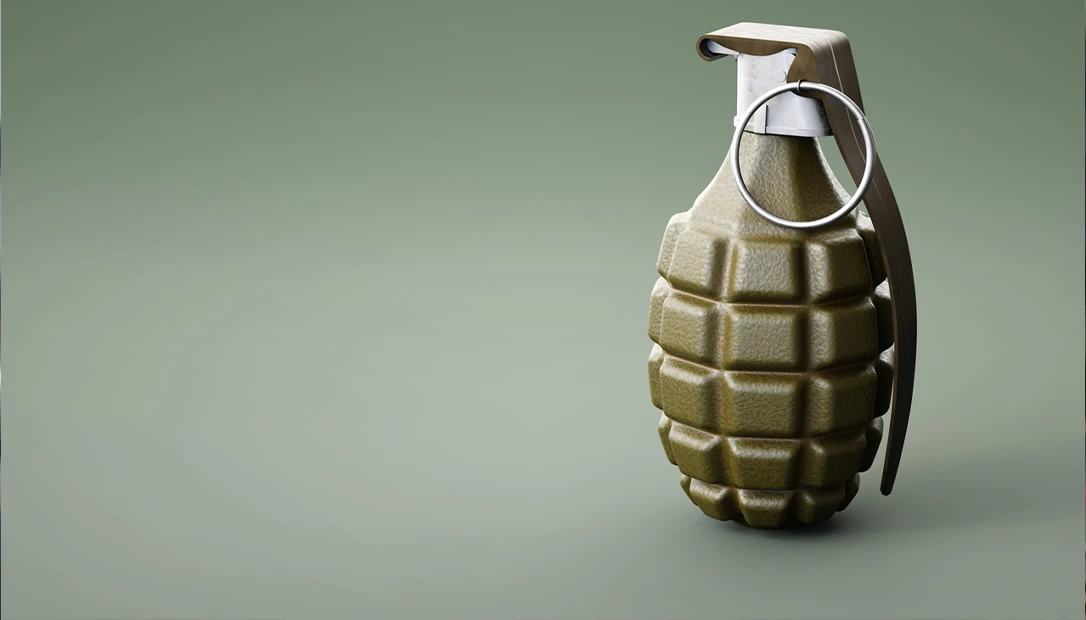
Grenade Types.
Not all grenades are created equal. Different situations require different tools, and military forces use a variety of grenade types depending on the mission.
Advertisement — Continue Reading Below
Fragmentation Grenades
This is the classic grenade everyone pictures when they hear “Frag Out.” Fragmentation grenades are designed specifically to kill or incapacitate enemy personnel through explosive force and flying shrapnel. If the mission requires clearing enemy fighting positions quickly and violently, this is the go-to option.
Offensive Grenades
Unlike fragmentation grenades, offensive grenades rely more on blast pressure and concussion than shrapnel. These are especially useful in enclosed spaces where overpressure can disorient or incapacitate enemies without sending fragments ricocheting back toward friendly forces. In tight rooms and hallways, concussion can be just as devastating as steel fragments.
Smoke Grenades
Smoke grenades are among the most versatile tools on the battlefield. They’re used for signaling, screening troop movement, marking landing zones, or creating visual cover during assaults and retreats. Colored smoke can communicate everything from extraction points to danger zones. They also make every training exercise look like an action movie poster.
Advertisement — Continue Reading Below
Chemical Grenades
Chemical grenades are typically used for riot control or area denial, dispersing irritants such as tear gas to flush personnel out of enclosed spaces or disperse hostile crowds. While less lethal than fragmentation grenades, they can still create confusion, panic, and temporary incapacitation.
Incendiary Grenades
Incendiary grenades are designed to burn extremely hot, often reaching temperatures capable of melting metal and destroying equipment. Thermite-based versions can burn even underwater, making them highly effective for disabling vehicles, destroying weapons, or eliminating sensitive electronics and classified materials. If something absolutely cannot fall into enemy hands, incendiary devices solve that problem quickly.
Grenades in Close-Quarters Combat
Grenades truly shine in close-quarters battle environments. Urban combat, trench warfare, bunker clearing, and room-to-room fighting are all situations where grenades can provide a major tactical advantage. Before entering a hostile room, soldiers may deploy a grenade to disorient or neutralize threats inside before crossing the doorway.
Advertisement — Continue Reading Below
That said, grenades are far from foolproof. Walls, furniture, windows, and terrain can redirect fragments unpredictably. Throwing one inside a confined area without understanding the layout can create just as much danger for friendlies as enemies. Combat veterans often stress that grenades are tools—not magic solutions.
The Psychology of “Frag Out”
Beyond the physical destruction, grenades carry a serious psychological effect. The sound of a spoon popping loose or the metallic clink of a grenade hitting the ground creates instant panic. Even experienced fighters know that once a grenade lands nearby, the clock is ticking and decisions need to happen fast.
That psychological pressure makes grenades incredibly effective for forcing enemies out of cover, disrupting ambushes, or controlling movement during combat. Few battlefield sounds command attention faster than someone yelling “Frag Out!” at full volume.
Advertisement — Continue Reading Below
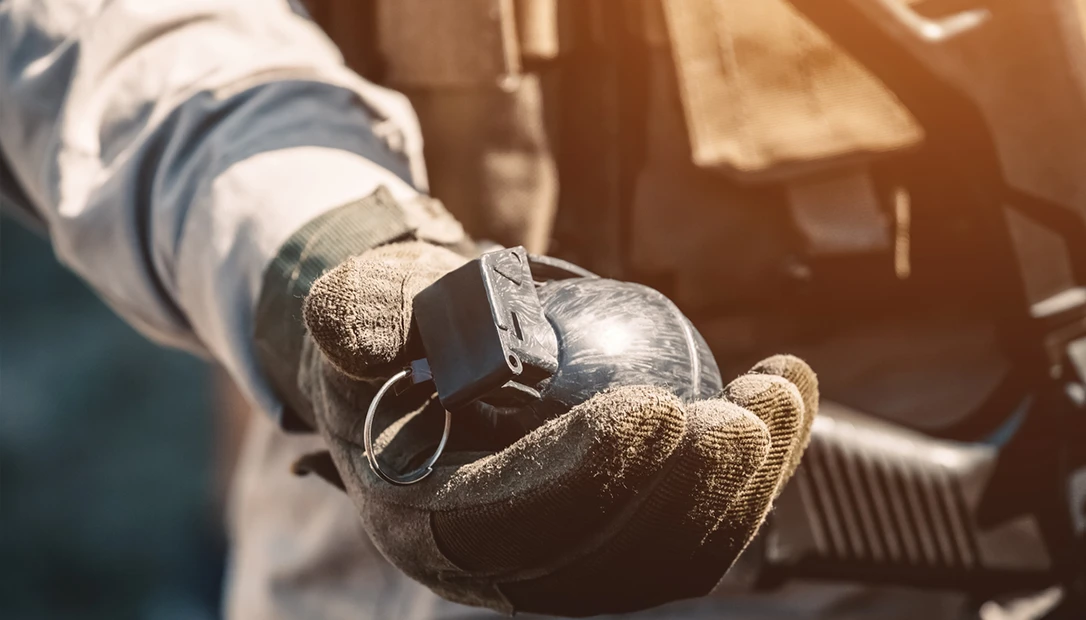
How to Throw a Grenade
Throwing a grenade sounds simple, but proper technique matters. Bad throws have historically produced some very unfortunate stories.
1. Identify the Target
Know exactly where the grenade is going and make sure you’re not inside the danger zone. Distance and cover are your friends.
2. Maintain Control
Grip the grenade firmly while keeping constant pressure on the safety lever. Losing control of the spoon before you’re ready is a mistake you only make once.
3. Pull the Pin
Using your opposite hand, remove the safety pin while maintaining your grip on the grenade. Despite what movies suggest, pulling pins with your teeth is mostly Hollywood nonsense unless you enjoy dental emergencies.
4. Throw Hard and Accurate
Use an overhand throwing motion similar to throwing a baseball. Accuracy matters just as much as distance. A perfectly thrown grenade in the wrong spot is still a bad throw.
5. Seek Cover Immediately
Once the grenade leaves your hand, get behind cover immediately. The explosion itself is dangerous, but fragmentation can bounce unpredictably off hard surfaces. Watching your own explosion might look cool in movies, but reality tends to punish showmanship.
Duck and Cover
Grenades may be small, but their impact on warfare has been massive. From trench raids in World War I to modern urban combat operations, these compact explosives continue to play a critical role on the battlefield. They’re simple, brutally effective, and demand respect from anyone using them.
At the end of the day, a grenade is one of the purest examples of military efficiency ever designed: compact enough to fit in one hand, powerful enough to change an entire fight in seconds.